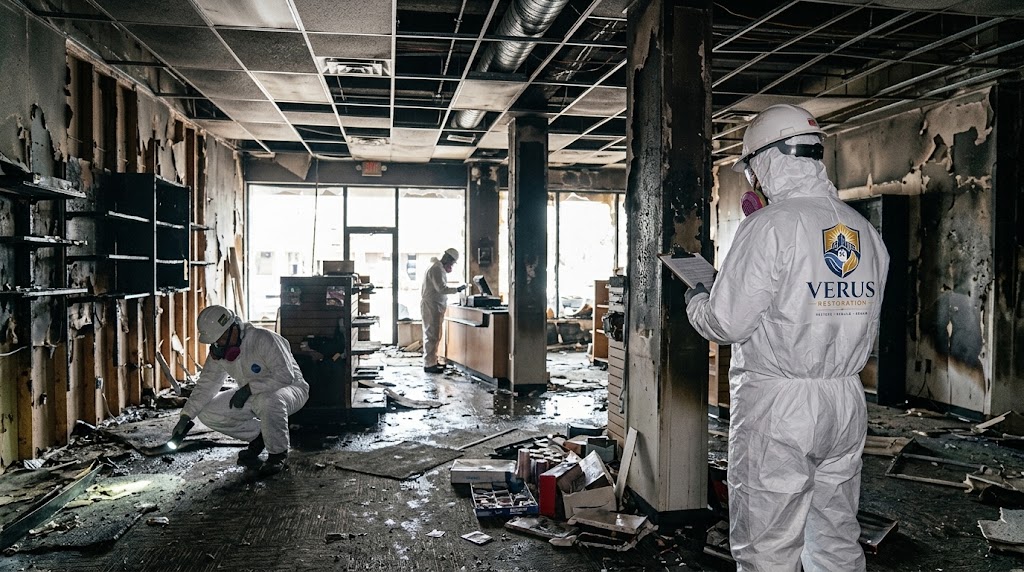
The Fire Was Small. The Smoke Went Everywhere.
Soot and smoke residue cleaning and odor removal for homes and businesses — including the rooms, and the houses, where nothing actually burned
If you can still smell it, it isn’t gone. Call or text and we’ll find the source.
★ 4.8 on Google · A person answers 24/7 · Insurance-ready documentation from the first visit · Locally owned in Norcross
What Not to Do After Smoke Damage
The instinct to start cleaning is the expensive one. Wiping soot off walls, ceilings or furniture smears it into the finish. Household cleaners set protein residue and stains. Running the HVAC pushes soot through every duct and register in the building. And washing smoke-damaged clothes in a home machine can fix the odor in permanently.
- Open windows if the weather allows, and keep the HVAC off
- Limit traffic through affected rooms — soot tracks into carpet and up stairs
- Photograph everything before it’s touched
- Note what burned — food, a dryer, wiring, a furnace — it tells us which residue we’re cleaning
- Don’t discard anything until it’s documented; more can be saved than you’d think
- Call (404) 983-0966 — we’ll tell you what to leave alone and when we’ll be there
Helpful resource: Ready.gov: after a home fire
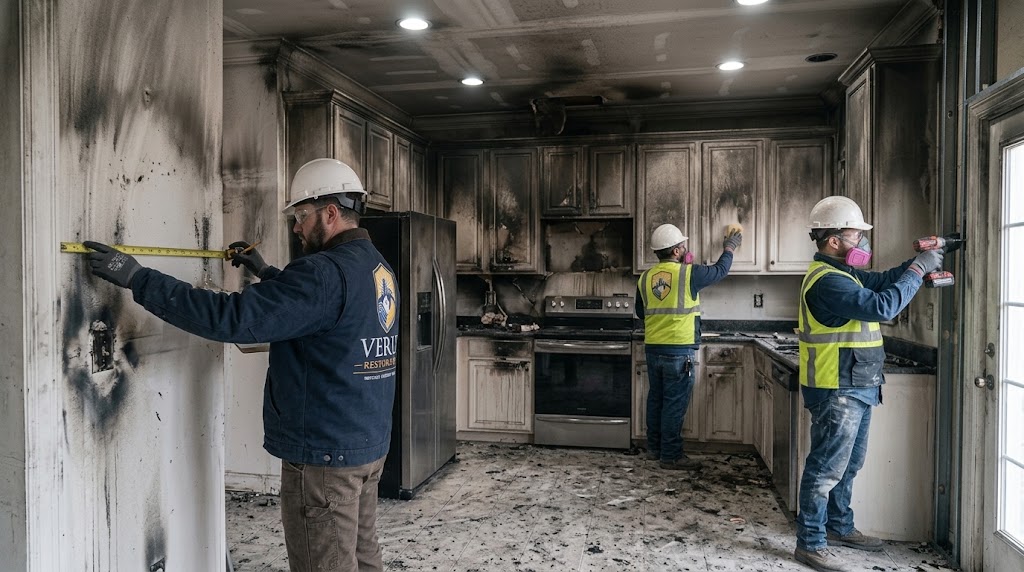
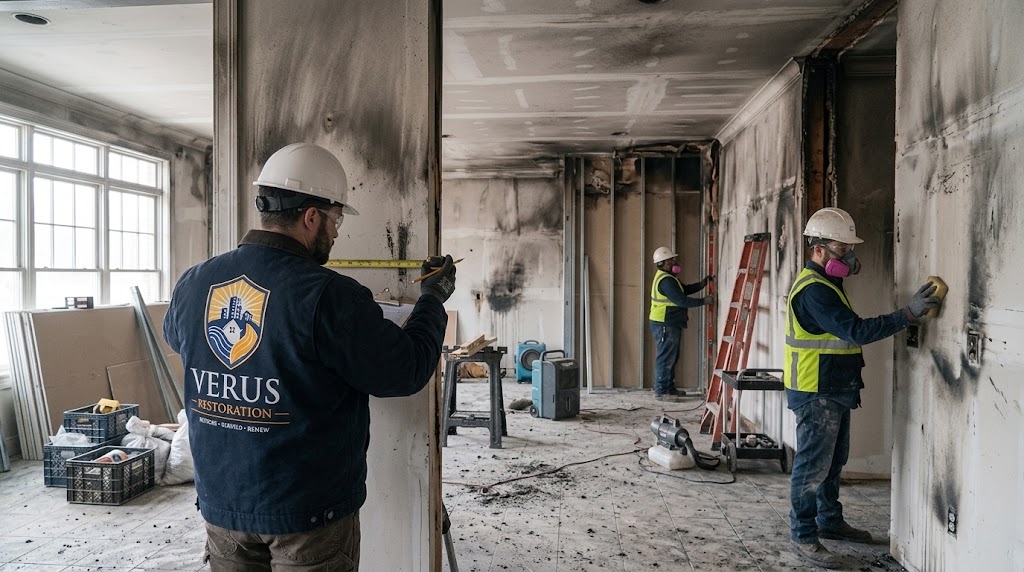
Verus Restoration provides smoke damage restoration throughout Metro Atlanta and Northeast Georgia — removing soot and smoke residue from surfaces, structure and contents, treating odor at its source rather than masking it, and cleaning the HVAC system that spread it. After a contained kitchen fire, a furnace puffback, an electrical fire, or smoke that drifted in from a neighbor’s unit, we bring the property back to clean surfaces and clean air.
- Availability
- Open 24 hours, 7 days a week
- Service
- Residue cleaning, odor removal, contents, HVAC
- Situations
- Kitchen & protein fires, puffbacks, electrical, neighboring fires
- Area
- Norcross, GA · Metro Atlanta
Smoke damage is a clock. Soot is acidic: within hours it discolors paint and finishes, within days it etches metal, glass and stone and yellows plastics permanently. Odor binds into drywall, insulation, fabric and wood, and every attempt to wipe it with a household cleaner drives it deeper. The sooner the right cleaning starts, the more of the property is saved rather than replaced. Call or text (404) 983-0966.
Not All Smoke Is the Same — and Each Kind Is Cleaned Differently
What burned, how hot and how fast decides what’s on your walls. Using the wrong method on the wrong residue is how smoke damage gets smeared in instead of removed.
- Dry smoke — fast, hot fires; a fine powdery soot that travels far and is the easiest to lift when it hasn’t been touched
- Wet smoke — slow, smoldering fires; sticky, smeary residue with a heavy odor that clings to every surface
- Protein residue — kitchen and cooking fires; nearly invisible, but it discolors paint and varnish and carries an intense, lingering odor
- Fuel-oil soot — furnace puffbacks; an oily black film across whole floors of a building, often with no fire at all
- Plastics and electrical residue — sticky, acrid and corrosive to electronics and metal
- Where it hides — ductwork, closets, inside cabinets and drawers, behind pictures, attic insulation, and rooms three floors from the source
Our Smoke Damage Restoration Process
-
Assess & identify the residue
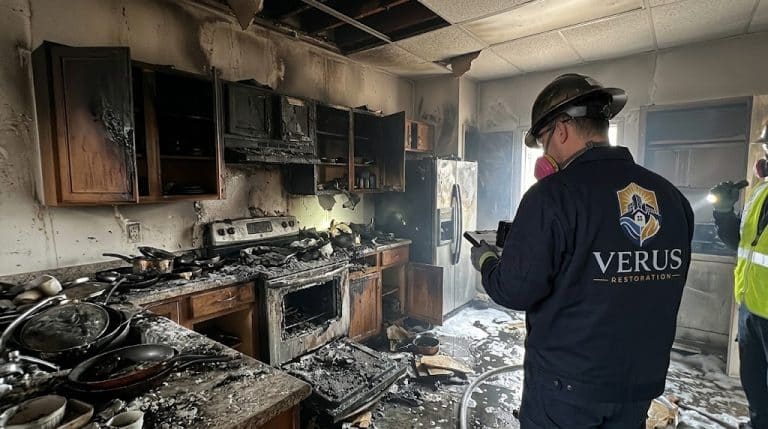
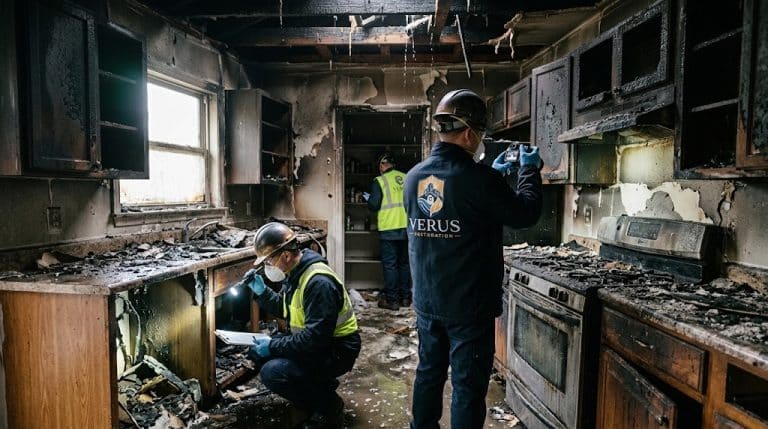
We trace how far smoke traveled, test surfaces to identify the residue type, and document every affected room and item for your claim.
-
Protect & contain
Unaffected areas are sealed off, air filtration is set up to capture airborne soot, and contents are packed out for cleaning so the structure can be worked on.
-
Clean the structure
Dry soot is lifted before any moisture touches it; wet, protein and oily residues get the wet-cleaning methods they need. Ceilings, walls, floors, cabinets, fixtures — every surface, in the right order.
-
Remove the odor at the source
Materials that will never stop smelling are removed; the rest is cleaned, treated and where needed sealed. Professional deodorization — thermal fogging, hydroxyl or ozone treatment, depending on the space — reaches what cleaning can’t. Ductwork is cleaned so the system stops recirculating it.
-
Restore finishes & return contents
Odor-sealing primer and fresh paint where needed, replacement of what couldn’t be saved, cleaned contents returned and placed, and a final walk-through by nose as much as by eye.
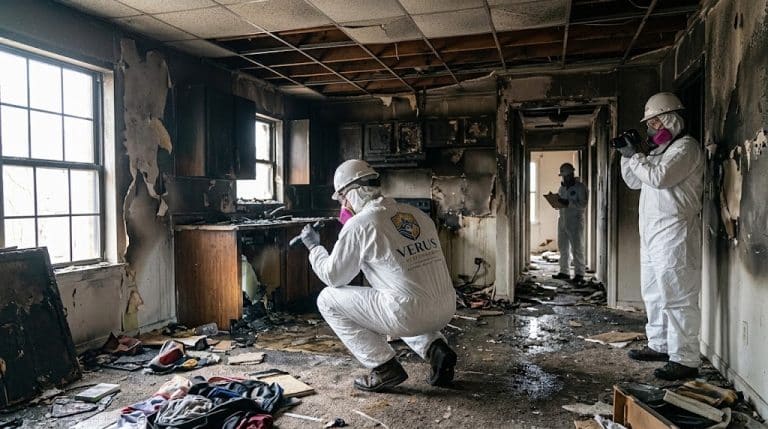
Working With Your Insurance Company
Smoke damage is usually part of a fire insurance claim, even when the fire was small. We help you file it and document the job the way adjusters expect, so you are not stuck in the middle.
Your insurer may suggest a preferred vendor. The choice of who restores your property is still yours, and you can call us first.
Photos, moisture readings and a written scope of the damage, so your claim starts with evidence, not guesswork.
We walk you through what to report and what your adjuster will ask for, and we answer their questions about the work.
Take photos, stop the source if it is safe, and keep damaged items until they are documented. Then call us and your insurer.