Water Damage Repair & Restoration in Metro Atlanta
★ 4.8 on Google · A person answers 24/7 · We help you file your insurance claim
Water Goes Where You Can’t See. We Follow It.
Emergency water damage cleanup and repair for homes and businesses — from the burst pipe or leak through extraction and drying, with a seamless hand-off to our reconstruction partner for the rebuild
The leak took a minute. Everything after that depends on how fast you call. We’re open right now.
★ 4.8 on Google · A person answers 24/7 · Insurance-ready documentation from the first visit · Locally owned in Norcross
What to Do in the First Ten Minutes
Water and electricity don’t mix. Don’t step into standing water that could be touching outlets, cords, appliances or the electrical panel. If the water came from a toilet, a drain or a sewer line, keep people and pets away from it entirely — that’s contaminated water and it’s handled differently.
- Shut off the water at the fixture valve or the main — every household should know where the main is
- Cut power to the affected area at the breaker if you can do it safely and dry
- Move furniture, rugs and electronics off wet floors; put foil or blocks under furniture legs
- Photograph the water and the damage before anything is cleaned up
- Skip the household wet-vac and fans as a fix — they help a little and can’t dry what’s inside walls and floors
- Call (404) 983-0966 — we’ll walk you through anything else on the phone
Helpful resource: Ready.gov: what to do after a flood
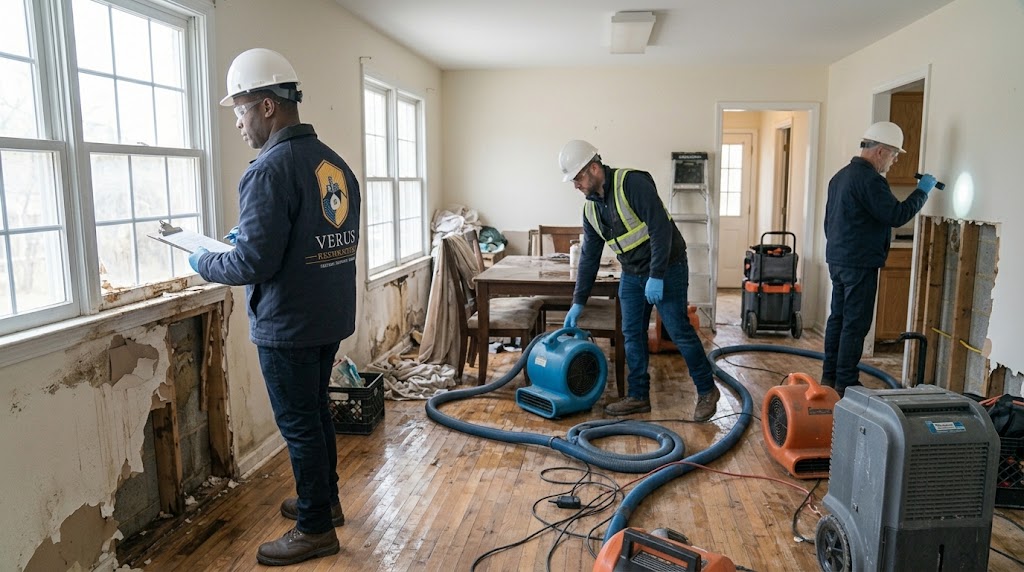
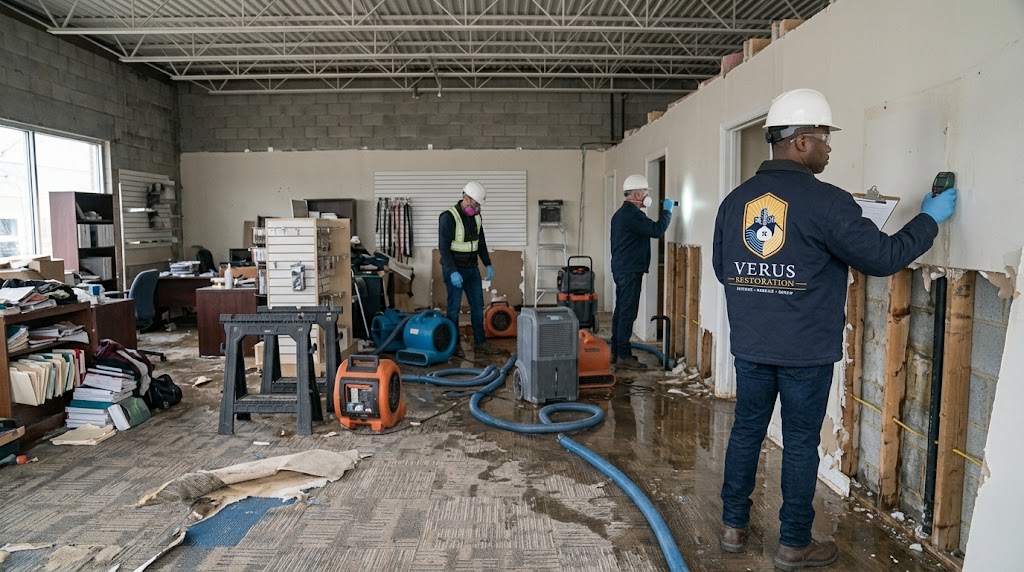
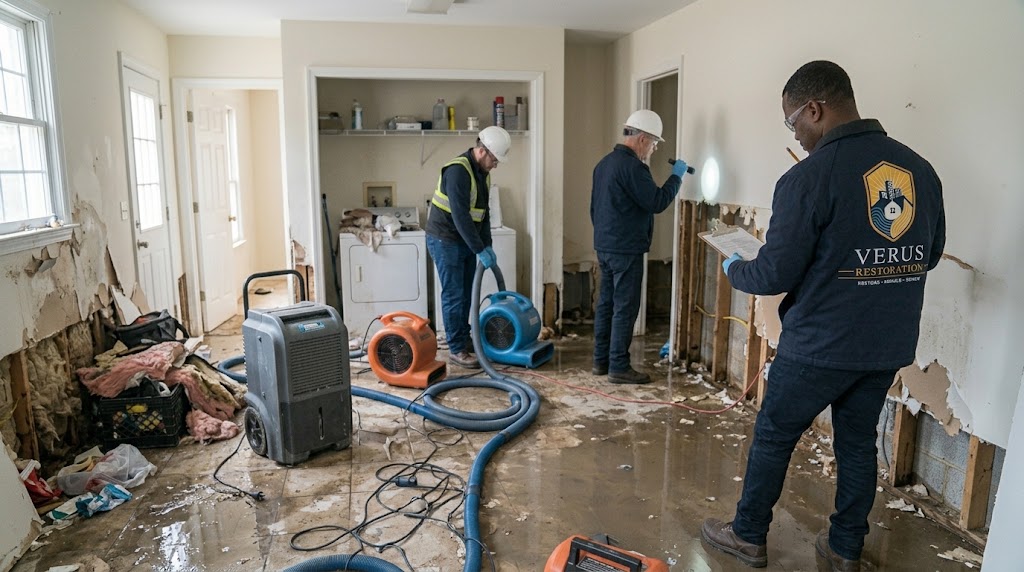
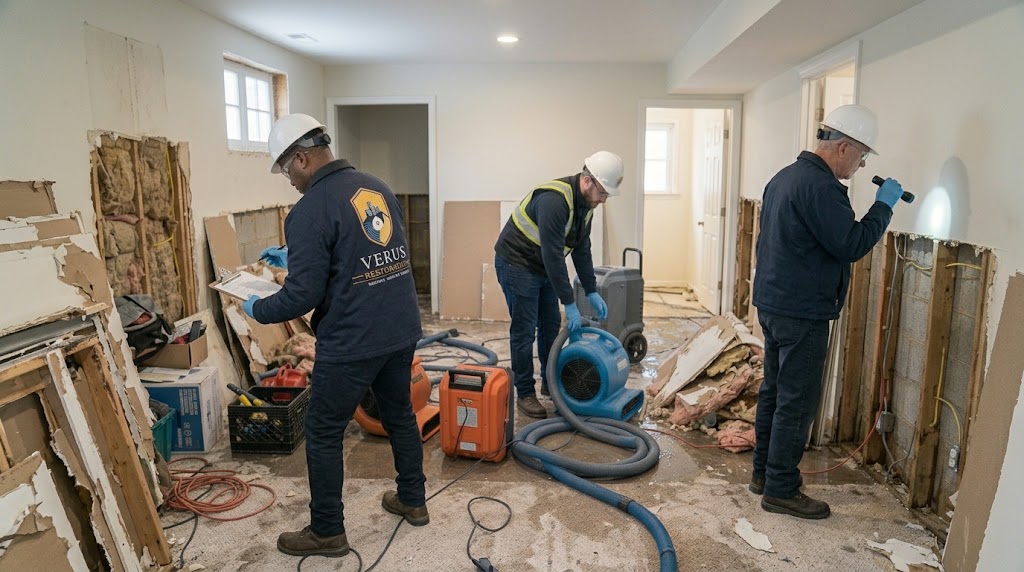
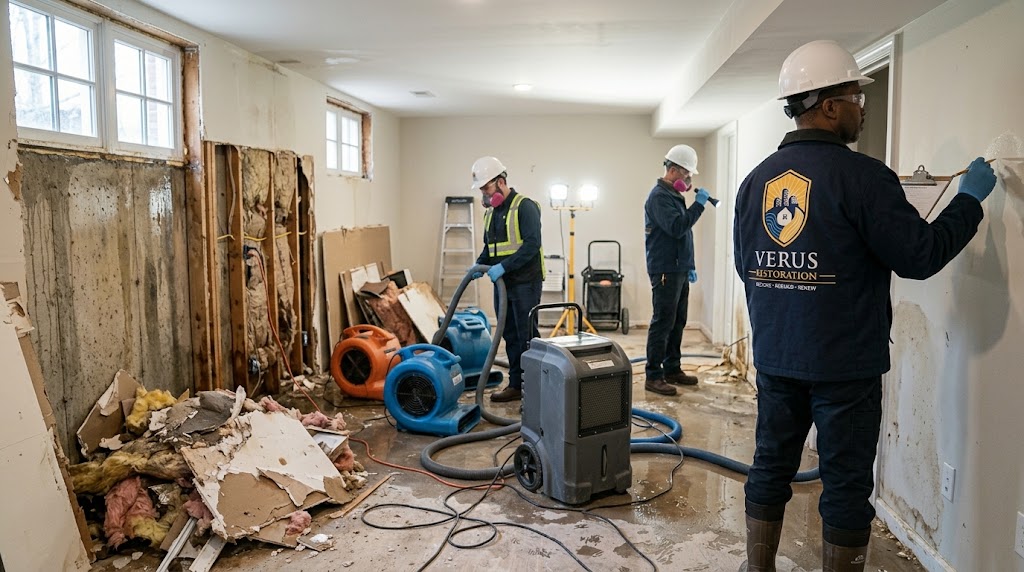
Verus Restoration provides water damage repair and restoration throughout Metro Atlanta and Northeast Georgia. Whether it’s a burst pipe, a failed water heater, a washing-machine line, a roof leak or an overflow, we stop the source, remove the water, dry the structure to verified standard, and hand the repair of every surface and material the water damaged to our reconstruction partner — one team from the first call, 24 hours a day.
- Availability
- Open 24 hours, 7 days a week
- Service
- Extraction, drying, cleanup
- Sources
- Pipes, appliances, water heaters, roofs, overflows, slab leaks
- Area
- Norcross, GA · Metro Atlanta
Water damage compounds by the hour. Drywall wicks it upward, hardwood cups, subfloor swells, and within a day or two the conditions for mold are in place. What the water was — clean supply water, dishwasher discharge, or a sewer backup — decides what can be saved and what has to go, and it changes as time passes. The faster the call, the more of your home survives. Call or text (404) 983-0966.
The Water Damage We See Most in Metro Atlanta Homes
Almost all of it starts small and quiet — a fitting, a hose, a pan, a shingle — and a lot of it starts in places you don’t look: attics, crawl spaces and the wall behind the washer.
- Burst and frozen pipes — winter freezes find the lines in attics, crawl spaces and exterior walls
- Washing machine and dishwasher supply lines, which fail without warning
- Water heater failures — tanks that let go at the bottom seam after a decade of service
- Refrigerator ice-maker lines — a slow drip under the fridge for months
- Toilet and tub overflows and failed wax rings under toilets
- Roof leaks and wind-driven rain after storms
- HVAC condensate overflows from attic air handlers — one of the most common ceiling stains in North Atlanta
- Slab leaks and sewer backups, which need a very different response than a clean-water leak
Our Water Damage Repair Process
-
Stop & assess
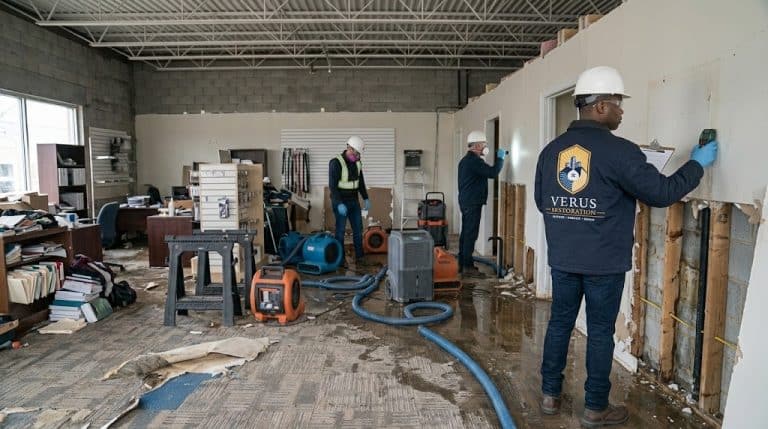
Confirm the source is stopped, identify the water category, and map how far moisture has traveled into walls, floors and framing — documented for your claim.
-
Extract
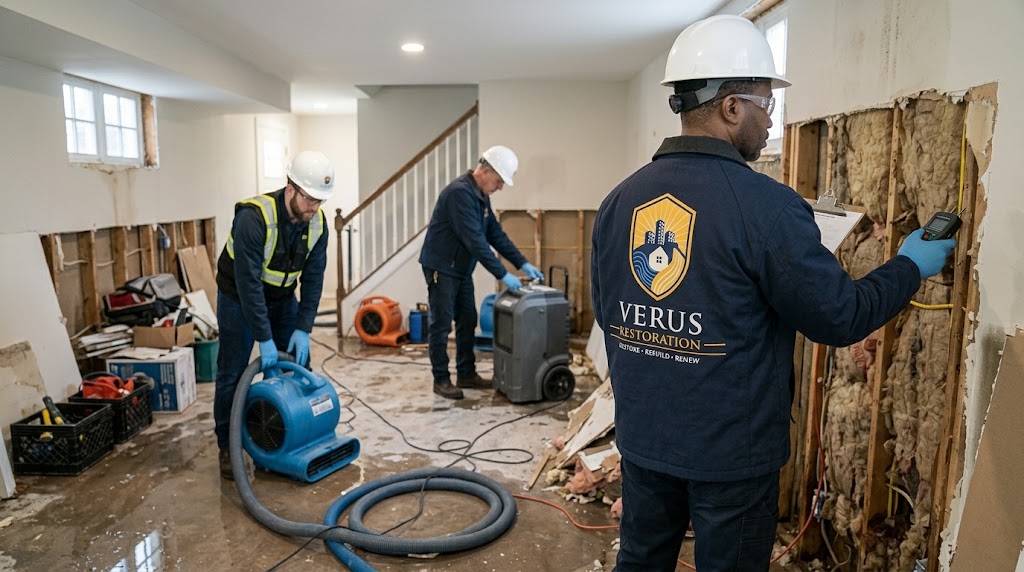
Standing water pumped out; the rest pulled from carpet, pad and hard floors with professional extraction equipment.
-
Remove & treat
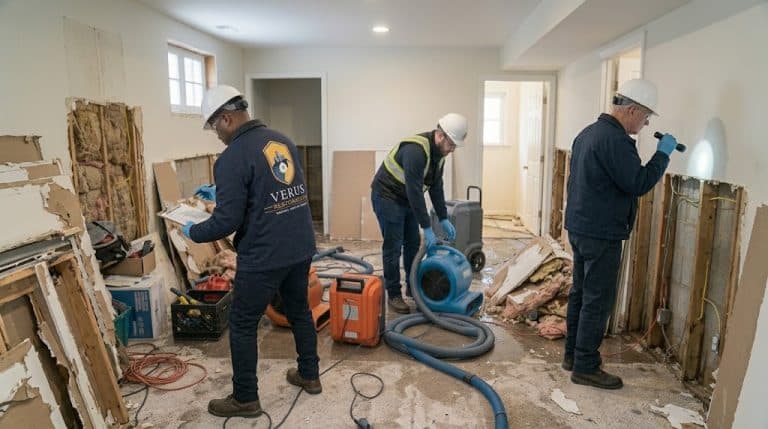
Materials that can’t be saved — saturated drywall, insulation, carpet pad — are removed and listed. Everything that stays is cleaned and treated with antimicrobials.
-
Dry & monitor
Air movers and dehumidifiers sized to the loss, with daily moisture readings until every material reaches dry standard.
-
Rebuild hand-off
Drywall, insulation, flooring, trim, cabinets and paint — put back by our reconstruction partner, with a seamless hand-off so there’s no gap between dry and done.
Working With Your Insurance Company
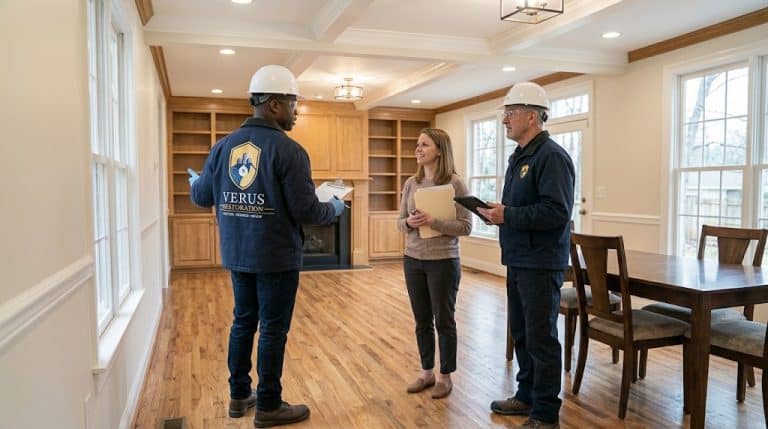
A water damage loss usually becomes an insurance claim. We help you file it and document the job the way adjusters expect, so you are not stuck in the middle.
Your insurer may suggest a preferred vendor. The choice of who restores your property is still yours, and you can call us first.
Photos, moisture readings and a written scope of the damage, so your claim starts with evidence, not guesswork.
We walk you through what to report and what your adjuster will ask for, and we answer their questions about the work.
Take photos, stop the source if it is safe, and keep damaged items until they are documented. Then call us and your insurer.
Water Damage Repair Is the Whole Sequence — These Are Its Parts
Some water losses need every step; some need one. Each is its own service; the rebuild comes through our reconstruction partner.
- Water Water Removal Emergency pump-out and extraction of standing water — the first hours of any water loss. Emergency water removal
- Water Drying & Dehumidification Commercial drying equipment and daily moisture monitoring until the structure is verifiably dry. Structural drying
- Water Basement Flooding Pump-out, drying and restoration for flooded basements and crawl spaces. Basement flood cleanup
- Mold Mold Removal & Remediation When water sat too long before drying started: containment, removal and fixing the cause. Mold remediation
- Recovery Contents Cleaning & Storage Wet furniture, documents and belongings dried, cleaned and stored while the structure is restored. Contents restoration
- Rebuild Reconstruction Drywall, flooring, cabinets and finishes rebuilt by our reconstruction partner after drying is verified. Rebuild via our partner
Why the Water’s Category Changes Everything — Including Your Claim
Restoration sorts water into three categories. Clean water from a supply line or a water heater can soak materials that are then dried and saved. Gray water from a dishwasher, washing machine or tub overflow carries contaminants, and porous materials it touched usually come out. Black water from a sewer backup, a toilet overflow with waste, or outside flooding is contaminated; anything porous it reached is removed, and the area is cleaned and sanitized before drying. Clean water that sits for days becomes gray water — another reason the first call matters.
On the insurance side, most policies distinguish sudden water damage — a burst pipe, a failed line — which is generally covered, from gradual damage — a leak that went on for months — which often isn’t. Sewer backups frequently need a separate endorsement. We document the source, the category and the extent of the damage from the first visit so the claim starts on solid ground.
Why Metro Atlanta Property Owners Call Verus for Water Damage
-
Source first, every time
We confirm where the water came from and that it’s stopped before anything else — drying a room with an active leak is theater.
-
Dry means verified
Daily moisture readings in every affected material, equipment out when the numbers say so, and a drying log for your file.
-
Repairs through our partner
The crew that removed the drywall puts it back. No searching for a contractor while your walls sit open.
-
Open 24 hours
Pipes burst at 3 a.m. and water heaters fail on holidays. Call or text any time.
Water Damage Repair Across Metro Atlanta
Based in Norcross, we respond to water losses across Gwinnett, DeKalb, Fulton and Cobb counties, with coverage into Northeast Georgia.
Water Damage Repair FAQs
What should I do first when I find water damage?
Stop the water at the valve or the main, cut power to the area if it’s safe, move what you can off wet floors, photograph the damage, and call (404) 983-0966. The first hour decides how much has to be rebuilt.
How long does water damage repair take?
Extraction happens the same day. Drying typically takes several days depending on how much water there was, how long it sat and what got wet. Repairs follow once drying is verified — a few days for drywall and paint, longer when flooring, cabinets or multiple rooms are involved. We give you a timeline after the assessment and keep it current.
Does homeowners insurance cover water damage?
Sudden and accidental water damage — a burst pipe, a failed supply line, an appliance that lets go — is generally covered. Gradual leaks, neglected maintenance and outside flooding generally aren’t, and sewer backups often require a separate endorsement. Check your policy; we document the source and extent so your adjuster has what they need.
How do you find water damage I can’t see?
With moisture meters on walls, floors and framing, humidity readings, and thermal imaging that shows the temperature difference where materials are wet behind finishes. Water travels down and sideways from where it entered, so we map the whole path rather than drying the spot you can see.
Will water damage cause mold?
It can, within 24 to 48 hours in materials that stay wet. Fast extraction, removal of saturated porous materials, antimicrobial treatment and verified drying are how it’s prevented. If growth has already started, our mold remediation team handles it as part of the same project.
Do I have to replace my drywall and flooring?
Not always. Clean water caught quickly can often be dried in place, including drywall and hardwood. Materials that were saturated, sat for days, or were touched by gray or black water generally come out. We tell you which is which, and why, before anything is removed.
How do I choose a water damage restoration company?
Choose one where a person answers 24/7 and a crew can be on site within hours, that dries to measured moisture readings rather than guesswork, documents the job with photos and daily readings for your insurer, and gives you a written, itemized estimate. Check recent local Google reviews. You can choose your own company even if your insurer suggests one.
What does water damage restoration include?
Finding and stopping the source, extracting standing water, removing materials that can’t be saved, drying the structure with air movers and dehumidifiers until readings reach dry standard, cleaning and antimicrobial treatment where needed, and documenting everything for the claim. Putting drywall, flooring and finishes back is the reconstruction phase, which our partner company handles.
How much does water damage restoration cost in Atlanta?
Angi puts the national average around $3,868, with most jobs between $1,383 and $6,369, or roughly $3.50 per square foot for clean water up to $7.50 for black water. In Atlanta the number rises with how long the water sat, because Georgia humidity turns a two-day-old leak into a mold job. A sudden, covered loss is usually paid by insurance after your deductible. Our Atlanta cost guide breaks it down.
The leak took a minute. Everything after that depends on how fast you call. We’re open right now.
Prefer email? [email protected] · Open 24 hours · Norcross, GA · Serving Metro Atlanta & Northeast Georgia