
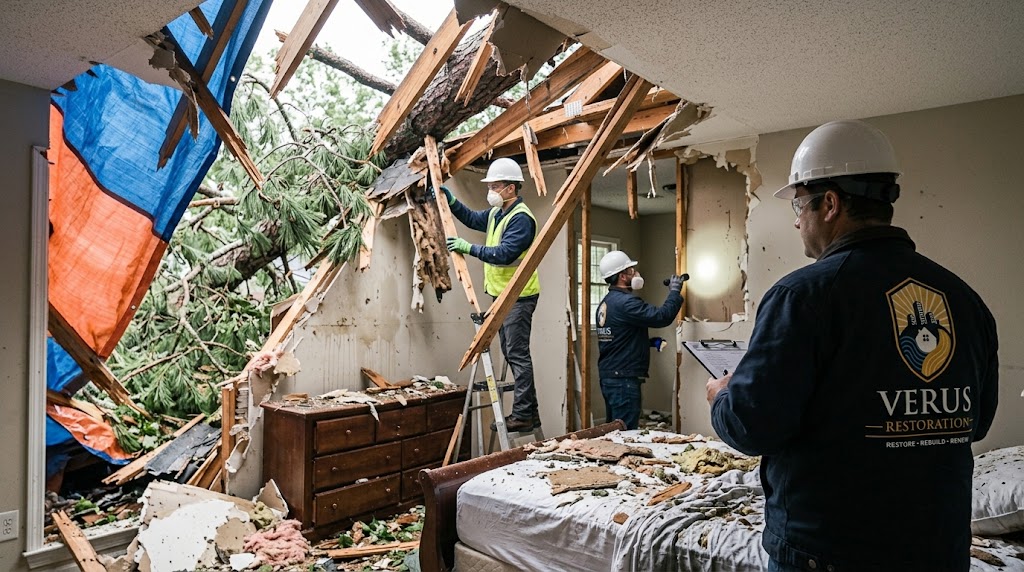
Most people in metro Atlanta think of spring as storm season. It is the big one, but it is not the only one. Georgia has a second severe weather season that runs through November and December, and it lands right on top of the holidays — when houses sit empty for travel, roofs are covered in wet leaves and everyone is busy. Here is what fall storms do to North Metro Atlanta homes and how to get ready before the next front comes through.
- Georgia has a secondary severe weather season in November and December, with damaging wind, hail and tornadoes.
- Fall storms often move fast and can hit after dark, so set up alerts that will wake you.
- Clean gutters and check big trees now — leaves and saturated clay are what turn wind into roof and basement damage.
- Leaving town for the holidays? Shut off the main water valve and have someone check the house after any storm.
- After damage: stay safe, photograph everything, call your insurer, then get the roof tarped and any water out within 24 hours.
Yes, metro Atlanta gets severe storms in November. Georgia has a secondary severe weather season in late fall and early winter, when strong cold fronts meet warm, humid air and can produce damaging wind, hail and tornadoes. To prepare: set up weather alerts that will wake you, clean gutters, have large trees near the house checked, secure outdoor holiday decorations, and know where your water main and breaker are. If a storm damages your home, get to safety, photograph the damage, call your insurer and get emergency tarping and water removal started the same day.
Yes, Georgia has a second storm season
Spring gets the attention, but forecasters describe late fall and early winter as Georgia’s secondary severe weather season. As the seasons change, strong cold fronts sweep across the Southeast and run into air that is still warm and humid. When those two meet over North Georgia, the result can be lines of strong thunderstorms with straight-line winds, hail and short-lived tornadoes.
It has happened here. On November 30, 2016, the National Weather Service confirmed six tornadoes across north and central Georgia. One EF-1 damaged industrial buildings and flipped a tractor-trailer near Mableton in Cobb County. Another EF-1 snapped large pines in north Atlanta and dropped a tree on a home. That is the pattern we see in fall: not usually a giant outbreak, but fast storms, falling trees and damaged roofs scattered across the metro.
Why fall storms do more damage than you would expect
- Leaves clog gutters. A November downpour on clogged gutters sends water over the fascia, into soffits and down the inside of walls instead of away from the house.
- Wet clay loosens roots. After a few rainy days, red clay holds water and big trees lose their grip. A gust that would not matter in July can drop an oak on a roof in November.
- They can hit at night. Cold-season storms are often driven by fast-moving fronts, and some arrive after dark when people are asleep and outdoor warning sirens are hard to hear inside.
- Nobody is home. Thanksgiving and Christmas travel leave houses empty. A small roof leak that starts on a Friday can be a ceiling on the floor by the time you get back on Sunday.
Get ready this month
- Set up alerts that wake you up. Turn on Wireless Emergency Alerts on your phone, add a weather app with tornado warnings for your exact location, or use a NOAA weather radio. Do not count on hearing a siren from inside.
- Pick your safe spot. The lowest floor, an interior room or closet with no windows. Keep shoes, a flashlight and your phone charger there.
- Clean the gutters and downspouts once most leaves are down, and make sure downspouts carry water well away from the foundation.
- Look up at your trees. Dead limbs over the roof, trees that lean toward the house, or cracks and fungus at the base are worth a call to a certified arborist before the next front.
- Secure holiday decorations. Inflatables, light displays and extension cords become flying debris and tripping hazards in high wind. Stake them down or bring them in when a storm is forecast.
- Know your shut-offs. Find the main water valve and the electrical panel, label the breakers, and make sure everyone in the house knows where they are.
- Photograph every room and the roof. A few minutes of “before” video makes any future claim much easier.
- Read your declarations page. Many Georgia policies carry a separate wind or hail deductible. Know the number before you need it.
Leaving town for the holidays
An empty house is where small storm damage turns into a big job. Before you go:
- Turn off the main water valve if no one will be home. If a storm or a freeze causes a leak, there is far less water to come in.
- Leave the heat on, at least in the mid-50s, so pipes in exterior walls and crawl spaces stay above freezing if a cold snap follows the front.
- Ask a neighbor or friend to walk the house after any storm and check ceilings, the basement and the attic hatch.
- Consider inexpensive water leak sensors near the water heater, washer and under sinks, and a smart thermostat that alerts you if the house gets cold.
- Save our number, (404) 983-0966, in the phone of whoever is checking on the house. We can meet them there.
When a storm hits: the first hour
- Get to your safe spot when a tornado warning is issued for your area, and stay there until the warning expires.
- After the storm, treat every downed line as live. Stay well away and report it to Georgia Power or your EMC.
- Smell gas? Leave the house and call 911 from outside.
- Do not walk into a room with a tree in it or a ceiling that is sagging or bulging with water.
- Run generators outside only, at least 20 feet from the house and away from windows and doors.
The first day: document, protect, dry
- Photograph and video everything before anything is moved — outside, inside, the roof from the ground and every wet ceiling and floor.
- Call your insurance company and get a claim number. Ask what emergency services they expect you to arrange.
- Stop more water from getting in. Tarping the roof and boarding broken windows is emergency protection your policy expects you to take.
- Get the water out within 24 hours. Wet drywall, insulation and carpet pad can start growing mold in 24 to 48 hours in Georgia humidity. Professional extraction and drying keeps the damage, and the claim, smaller.
- Choose your own contractors. After any big storm, out-of-town crews knock on doors. Do not sign anything at the curb, and never let anyone “cover your deductible.”
What storm damage coverage usually looks like
Every policy is different, so read yours, but in general: wind, hail and a tree falling on the house are typically covered; rain that comes in through a storm-damaged roof is typically covered; and water that rises from outside, flooding, is not unless you carry a separate flood policy. Our guide to Georgia water damage coverage and storm damage checklist go deeper.
Frequently asked questions
Does Atlanta get tornadoes in November?
Yes. Most Georgia tornadoes happen in spring, but late fall and early winter are a secondary severe weather season. On November 30, 2016, for example, the National Weather Service confirmed six tornadoes in north and central Georgia, including EF-1 tornadoes in the Mableton area and in north Atlanta.
What should I do to prepare my house for fall storms?
Clean gutters and downspouts, have large trees near the house checked by an arborist, secure outdoor decorations, find your main water shut-off and electrical panel, photograph every room and the roof, and set up weather alerts that will wake you at night.
Should I turn off my water when I travel for the holidays?
If nobody will be in the house, turning off the main water valve is one of the best ways to limit damage from a leak, a burst pipe or storm damage. Leave the heat on so pipes in exterior walls do not freeze.
Is storm damage covered by homeowners insurance in Georgia?
Wind, hail and falling-tree damage to the house are usually covered, as is rain that enters through a storm-damaged roof or window. Rising water from outside is flood damage and usually needs a separate flood policy. Check your declarations page for a separate wind or hail deductible.
How fast do I need to dry out after a storm leak?
Start within 24 hours if you can. In Georgia humidity, mold can begin growing on wet drywall, insulation and carpet pad within 24 to 48 hours.
Is Verus Restoration open on holidays?
Yes. A person answers (404) 983-0966 24 hours a day, including Thanksgiving, Christmas and New Year’s, and we send crews for emergency tarping, board-up, water removal and drying across North Metro Atlanta.
Published by Verus Restoration, Norcross, GA — 24/7 water, fire, mold and storm damage restoration for 21 North Metro Atlanta communities. Sources: NWS Peachtree City, November 30, 2016 tornadoes, Atlanta News First, Georgia fall and winter weather, Ready.gov, Tornadoes. This article is general guidance, not a substitute for advice from your insurer, a licensed professional or emergency services. Call 911 for any immediate danger.
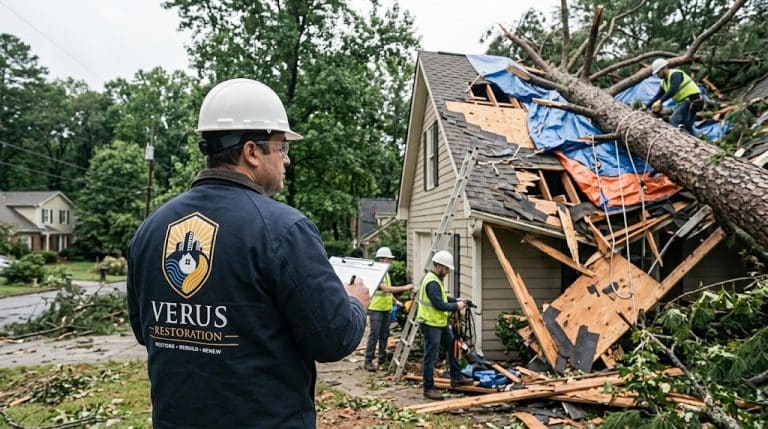
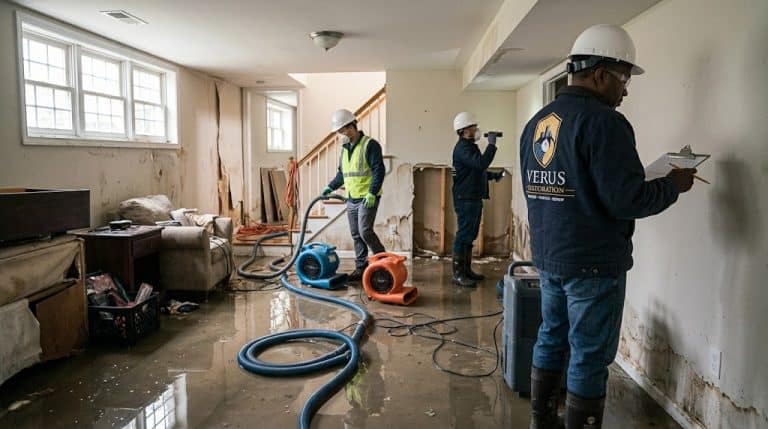
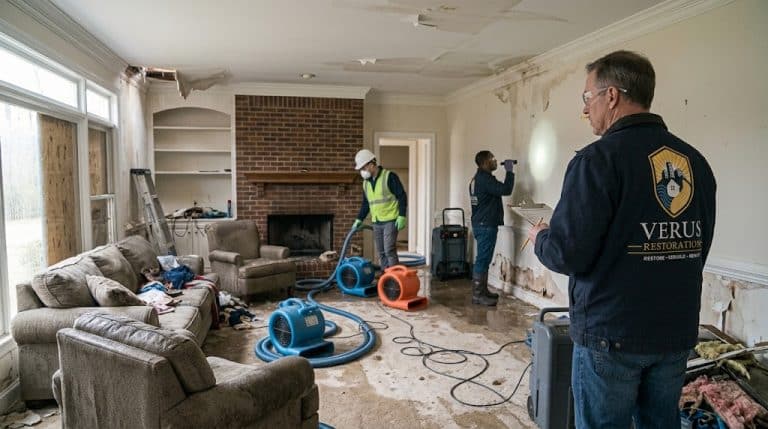
Storm Damage Response, Start to Finish
What our crews do after a fall storm: inspect, stop the water and dry the house out.
Helpful resource: Ready.gov: Tornadoes