
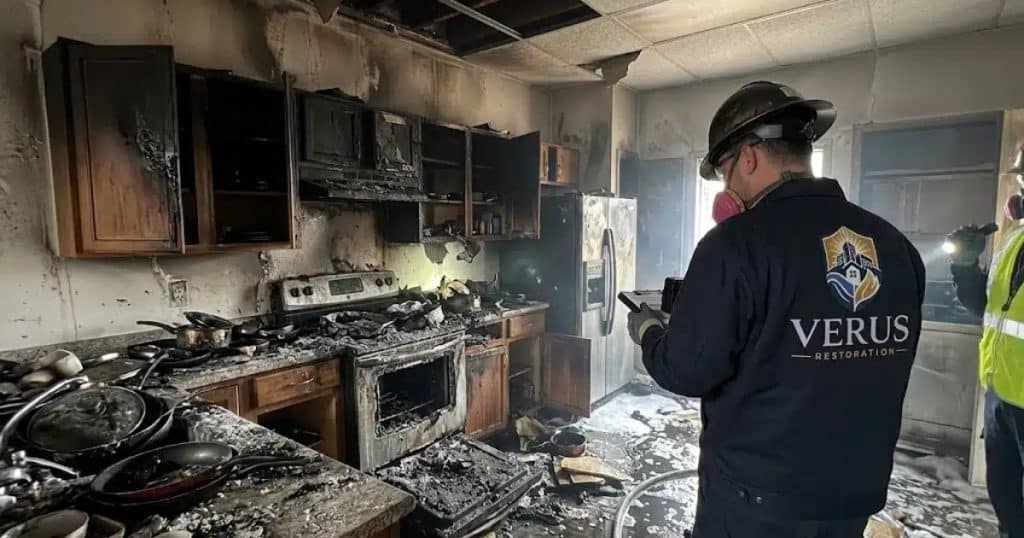
The holidays are when the house is fullest: a turkey in the oven, every burner going, a tree in the living room, lights on the porch, candles on the table and a space heater in the guest room. It is also the busiest stretch of the year for home fires. Here is where holiday fires actually start, how to head them off, and exactly what to do if smoke or fire reaches your home in North Metro Atlanta.
- Thanksgiving is the top day of the year for U.S. home cooking fires, and Christmas Day ranks close behind.
- Unattended cooking is the leading cause of cooking fires. Stay in the kitchen when anything is on the stove.
- Lights and electrical cords are behind about four in ten Christmas tree fires. Water the tree daily and keep it away from heat.
- Keep space heaters three feet from anything that can burn, and blow out candles before you leave the room.
- After a fire: get out, call 911, then keep the HVAC off and do not wipe soot until a restoration company has assessed it.
Most holiday home fires start in the kitchen. Thanksgiving is the peak day of the year for home cooking fires in the United States, and Christmas Day is close behind. Christmas trees, holiday lights, candles and space heaters cause most of the rest. To prevent them: never leave cooking unattended, keep a lid nearby for grease fires, water live trees every day and keep them away from heat, use only lights rated for the job, keep space heaters three feet from anything that burns and blow out candles before leaving the room. If a fire happens, get everyone out and call 911; once the fire department clears the house, call your insurer and a fire restoration company to stop smoke and water damage from spreading.
Why the holidays are fire season
National Fire Protection Association data show the same pattern every year. Thanksgiving is the leading day for home cooking fires in the United States: U.S. fire departments responded to an estimated 1,610 home cooking fires on Thanksgiving Day in 2022, close to five times the average day. In NFPA data, Christmas Day has ranked right behind Thanksgiving for cooking fires. December is also the peak month for candle fires, and the top days for candle fires have been Christmas Day, New Year’s Day and New Year’s Eve.
None of that is surprising when you think about a holiday house: more cooking, more people, more distractions, more cords and more open flames, all at once.
In the kitchen
- Stay in the kitchen while anything is frying, grilling, boiling or broiling. Unattended cooking is the leading cause of home cooking fires. If you have to leave, turn the burner off.
- Keep a lid and a sheet pan within reach. If a pan of grease catches fire, slide the lid over it and turn off the burner. Never throw water on a grease fire.
- Oven fire? Keep the door closed and turn it off. The fire will run out of air.
- Clear the stovetop of towels, oven mitts, paper and packaging.
- Keep kids and pets three feet from the stove and hot dishes.
- Turkey fryers stay outside on a flat surface, well away from the house, deck, garage and trees. Thaw and dry the bird completely and never overfill the oil.
- Check the smoke alarms before the guests arrive, and know where your fire extinguisher is.
Trees, lights and decorations
Christmas tree fires are not common, but they are serious when they happen. NFPA estimates U.S. fire departments responded to an average of 155 home fires a year that started with a Christmas tree from 2018 to 2022, and electrical distribution or lighting equipment was involved in about 41 percent of them.
- Choose a fresh tree with green needles that do not fall off when touched, cut an inch off the trunk and water it every day. A dry tree burns fast.
- Keep the tree at least three feet from fireplaces, radiators, space heaters, candles and heat vents.
- Use lights from a recognized testing lab, and only use outdoor-rated lights outside. Throw out sets with frayed wires or broken sockets.
- Do not overload outlets or run extension cords under rugs. Follow the manufacturer’s limit on how many light strings to connect.
- Turn off tree and decoration lights when you go to bed or leave the house.
- Get the tree out of the house after the holidays, once it starts drying out.
Candles, fireplaces and space heaters
- Keep candles at least a foot from anything that can burn, in sturdy holders, and blow them out before you leave the room or go to sleep. Battery candles look the same and cannot start a fire.
- Have the chimney inspected before the first fire of the season, use a screen, and let ashes cool in a metal container outside, well away from the house.
- Give space heaters three feet of clear space, plug them straight into the wall, and turn them off when you leave the room or go to bed.
- Never use the oven or a grill to heat the house, and keep generators outside.
If there is a fire
- Get everyone out and call 911. Do not go back in for anything. Small fires grow fast, and smoke is the bigger danger.
- Wait for the fire department to clear the house before anyone goes back inside.
- Call your insurance company and get a claim number. Ask about additional living expenses if you cannot stay in the house.
- Secure the property. Broken windows, doors forced open and holes cut in the roof need to be boarded up and tarped right away to protect the house and your belongings.
- Deal with the water. The water used to put out a fire soaks floors, walls and ceilings. It needs to be extracted and dried within a day or two to stop mold.
What not to do after smoke damage
- Do not run the heat or air conditioning until the system is checked. It can pull soot through the ducts into every room.
- Do not wipe soot off walls or furniture. Wiping smears it into paint and fabric and makes it harder to remove.
- Do not eat food that was near the fire, heat, smoke or soot, and throw out anything in the fridge if the power went out.
- Do not use electronics or appliances that were exposed to heat, smoke or water until they are checked.
- Do not throw away damaged items before your adjuster has seen them. Photograph everything first.
Smoke travels far beyond the room that burned. Soot settles in closets, HVAC ducts and fabrics throughout the house, and the odor will not go away with household cleaning. A fire and smoke restoration company can board up, remove the water, clean and deodorize, and pack out and clean the belongings that can be saved. Our guide to the first 48 hours after a house fire walks through it step by step.
Frequently asked questions
What is the most common cause of fires during the holidays?
Cooking. Thanksgiving is the top day of the year for home cooking fires in the United States, and Christmas Day ranks close behind. Unattended cooking is the leading cause, so stay in the kitchen while the stove is on.
How do Christmas tree fires start?
Most often from electrical problems. Electrical distribution or lighting equipment was involved in about 41 percent of U.S. home Christmas tree fires from 2018 to 2022, according to NFPA. Heat sources too close to the tree and candles cause others. Water the tree daily and keep it three feet from heat.
Should I put out a grease fire with water?
No. Water makes a grease fire spread. Slide a lid or sheet pan over the pan, turn off the burner and leave it covered. If the fire is not out quickly, get out and call 911.
Can I clean smoke damage myself?
Light surface soot from a small kitchen flare-up can sometimes be cleaned, but wiping soot usually smears it into surfaces, and smoke odor gets into ducts, insulation and fabrics. After any real fire, have a restoration company assess it before you clean.
Does homeowners insurance cover holiday fire damage?
Standard Georgia homeowners policies generally cover accidental fire and smoke damage, including cleanup, repairs and often temporary housing. Check your policy and call your insurer right away for a claim number.
Does Verus Restoration respond on Thanksgiving and Christmas?
Yes. A person answers (404) 983-0966 24 hours a day, every day of the year, including holidays, for board-up, water removal, smoke and soot cleanup, odor removal and contents pack-out across North Metro Atlanta.
Published by Verus Restoration, Norcross, GA — 24/7 water, fire, mold and storm damage restoration for 21 North Metro Atlanta communities. Sources: NFPA, Home Cooking Fires, NFPA, Winter holidays, U.S. Fire Administration, Holiday fire safety. This article is general guidance, not a substitute for advice from your insurer, a licensed professional or emergency services. Call 911 for any immediate danger.
Fire and Smoke Damage Cleanup, Step by Step
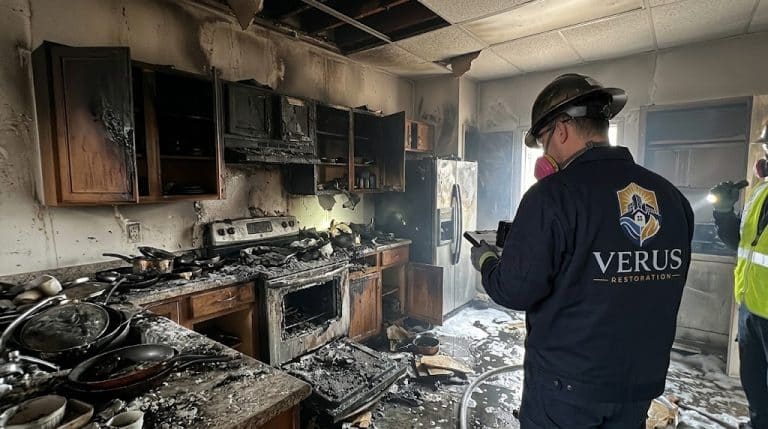
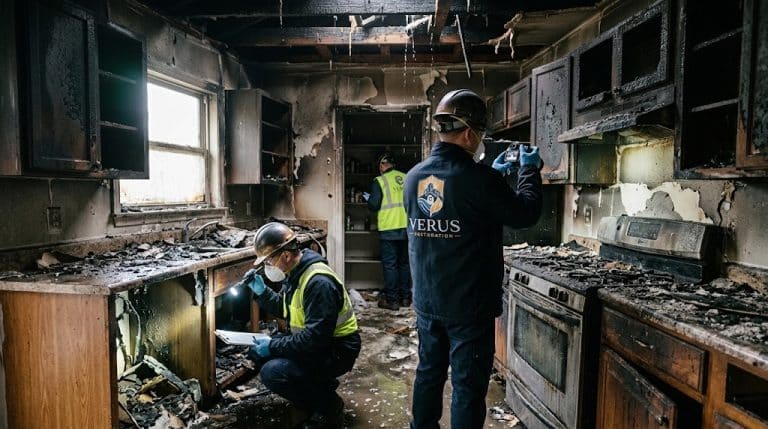
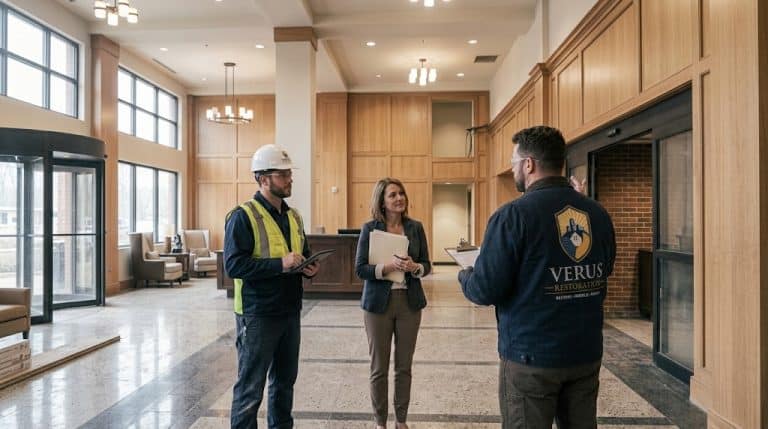
What fire restoration looks like on the ground: assessment, soot cleanup and drying out the water used to fight the fire.
Helpful resource: U.S. Fire Administration: Holiday fire safety